
Millions of adults step away from sport and exercise at some point – work, family, injury, or simply life getting in the way. What research consistently shows is that coming back, even after years or decades away, produces real, measurable health benefits. Age is not the barrier most people assume it to be. This article covers the evidence for lifelong activity, how to re-enter safely without overdoing it, what realistic progress looks like, and the range of options available – from casual fitness routines to recreational leagues and masters sport competitions.
Why It Is Never Too Late to Benefit From Movement
Think of physical activity less as something you either kept up or didn’t, and more as a long-term investment you can add to at almost any point. The returns don’t disappear just because you took a break.
What the Research Actually Shows

A landmark study published in JAMA Network Open tracked more than 116,000 adults over decades and found that people who exercised consistently in midlife had significantly lower rates of cardiovascular disease and all-cause mortality. What’s striking, though, is what happened to those who started exercising later. Adults who became active between ages 40 and 61 – even after years of inactivity – showed mortality risk reductions comparable to those who had exercised their whole lives. The body, it turns out, responds to effort regardless of when that effort begins.
Muscle mass tells a similar story. After 30, adults typically lose three to five percent of muscle per decade through a process called sarcopenia. Resistance training can slow and partially reverse this loss even in people starting in their 60s or 70s. A 2019 review in the British Journal of Sports Medicine confirmed that older adults who began strength training showed measurable gains in muscle mass and functional strength within eight to twelve weeks.
Beyond the Physical
Metabolic health responds quickly to renewed activity. Blood sugar regulation, insulin sensitivity, and cholesterol profiles can all improve within weeks of consistent moderate exercise. Balance – often overlooked until a fall happens – improves with targeted movement, reducing injury risk significantly in older adults.
Mood and cognitive function are equally responsive. Regular aerobic activity is associated with reduced symptoms of depression and anxiety, and research from the University of British Columbia found that consistent aerobic exercise increases hippocampal volume, the brain region most associated with memory.
The goal here isn’t elite performance. Improved function, greater independence, and a better quality of daily life are what most returning exercisers actually gain – and those benefits are well within reach.
How to Return After Years Away Without Overdoing It
Patience isn’t just a virtue here – it’s the whole strategy. After a long break from sport or exercise, the body needs time to rebuild the foundations it once had, and rushing that process is exactly how people end up back on the couch with a pulled hamstring or a flare-up of something they thought had healed years ago. Consistency and recovery aren’t optional extras. They’re the structure everything else is built on.
Understanding What a Long Break Actually Does to Your Body
Deconditioning happens faster than most people expect. Research suggests that aerobic capacity can begin declining within two to three weeks of inactivity, and muscle strength follows a similar path over months. After years away, the cardiovascular system, connective tissues, and neuromuscular coordination are all working at a reduced level. The body that walked off the court at 35 is not the body returning at 52, and accepting that gap honestly – without judgment – is the first practical step toward a safe comeback.
Where to Begin: Frequency, Intensity, and Load
Starting with two or three sessions per week at low intensity gives the body room to adapt without accumulating damage. Walking is genuinely underrated as a reentry point. A 30-minute brisk walk three times a week builds aerobic base, supports joint health, and creates a habit structure before anything more demanding is introduced. Strength training, even bodyweight-only at first, helps restore the muscle mass and bone density that decline with age and inactivity. Mobility work – hip circles, thoracic rotations, calf stretches – reduces injury risk in ways that cardio alone cannot. For anyone returning to a specific sport, short skill-focused drills before full participation help the nervous system relearn movement patterns without the stress of competitive intensity.
Old Injuries, Chronic Conditions, and When to Get Help First
There’s no embarrassment in seeing a physiotherapist before returning to exercise, especially with a history of knee, shoulder, or back problems. A single assessment can identify movement compensations that would otherwise lead to re-injury within weeks. Anyone managing a chronic condition – type 2 diabetes, hypertension, osteoarthritis – should get medical clearance first. Pain during exercise, persistent swelling, or chest discomfort are signals to stop and seek advice, not push through.
Choosing the Right Path: Casual Fitness, Recreational Leagues, or Masters Sport
There is no single correct way to be active again. Some people want solitude and structure. Others need a team, a scoreboard, and someone to hold them accountable on a cold Tuesday morning. The good news is that the options available to returning exercisers have never been broader, and matching the right format to your life makes the difference between an activity that sticks and one that fades after six weeks.
Solo and Casual Fitness
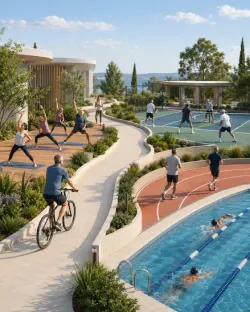
Walking, cycling, swimming, home workouts, gym memberships – casual fitness asks very little of you beyond showing up. There are no fixtures, no teammates depending on you, and no competitive pressure. For many returning exercisers, that freedom is exactly what they need early on. The flexibility suits irregular schedules and allows gradual progression without the social stakes of a group setting. The challenge is that without external accountability, motivation can drift. Building a simple routine – same time, same days – helps offset this.
Social Exercise Classes and Group Training
Yoga studios, community swimming sessions, parkrun, and group cycling classes occupy a middle ground. The commitment level is low enough to feel manageable, but the social element adds a layer of accountability that solo exercise rarely provides. Research consistently shows that people who exercise with others adhere to their routines longer. There’s also something to be said for the culture of these spaces – they tend to be welcoming to beginners and returners, with no expectation of elite performance.
Recreational Leagues
Local football, tennis, netball, and basketball leagues for adults offer structured competition without serious athletic demands. Most operate on a seasonal basis, meaning the commitment is finite and renewable. The social bonds formed in recreational leagues are often cited as the primary reason people keep returning year after year, sometimes long after the competitive instinct has softened.
Masters Sport
For those who want genuine competition, masters athletics, swimming, cycling, and rowing events are organised by age group, typically starting at 35 or 40. Standards vary enormously – many participants are recreational athletes who simply enjoy racing – but the environment rewards consistency and effort over raw talent. Masters sport tends to attract people who are serious about training without sacrificing the rest of their lives to it.
Adjusting Expectations While Still Making Meaningful Progress
Coming back to sport after years away means renegotiating your relationship with your own body – and that’s not a bad thing. The athlete you were at 28 set a useful foundation, but the person returning at 52 or 63 is working with different raw material. Adaptation isn’t failure. Recognizing what has changed, and building goals around your current self rather than a remembered one, is what separates sustainable return from repeated frustration.
What Changes – and What Doesn’t Have To
Some performance markers genuinely shift with age. Recovery takes longer. Top-end speed drops. Flexibility requires more deliberate attention. High-volume training weeks that felt manageable at 30 may now produce injury rather than fitness. These aren’t signs that something has gone wrong – they reflect normal physiological changes that exercise science has documented consistently across large cohort studies.
What tends to hold up well, or even improve, is worth paying attention to. Skill and technique often remain intact, sometimes sharpening with maturity. Body awareness – knowing when to ease off, how to pace a long effort, where tension accumulates – frequently becomes more refined. Discipline and consistency, when built around realistic targets, tend to strengthen. A 60-year-old returning to tennis is unlikely to serve faster than at 35, but may read the game better and manage energy across a match more intelligently.
Setting Goals That Actually Work
Two types of goals tend to work well together: outcome goals and process goals. An outcome goal gives you something to aim at – finishing a 5K, entering a local masters swim meet, rejoining a club tennis ladder, completing eight strength sessions in a month. A process goal keeps you showing up regardless of results – attending two gym sessions per week, stretching for ten minutes after every run, sleeping seven hours consistently.
Nostalgia can quietly distort both. There’s no denying the pull of wanting to match a personal best from decades ago, but that framing sets up a competition you’re unlikely to win. Benchmarking against your current self – comparing this month to last month, not to 1998 – is the more honest and more motivating measure.
Building a Weekly Routine That Supports a Safe Return
Returning to sport becomes much easier when activity fits naturally into the week rather than depending on motivation each day. A useful routine balances training, recovery, and ordinary life while leaving enough flexibility for unexpected fatigue or schedule changes. For most people coming back after a long break, the aim should be to create a pattern that can be repeated for months, not to fit as much exercise as possible into the first few weeks.
A simple weekly structure might include:
- Two strength sessions: Focus on major movement patterns such as squatting, pushing, pulling, hinging, and carrying. Moderate resistance and controlled technique are more important than lifting heavy weights immediately.
- Two aerobic sessions: Walking, swimming, cycling, or easy jogging can gradually rebuild cardiovascular fitness. Intensity should generally allow you to speak in short sentences without struggling for breath.
- One recreational activity: Tennis, golf, football, hiking, dancing, or another enjoyable activity can make the routine feel less like formal training and more like something you genuinely want to continue.
- Regular mobility work: Five to fifteen minutes of gentle mobility after training or on rest days can help maintain comfortable movement through the hips, shoulders, ankles, and upper back.
- At least one genuine recovery day: Rest is when the body adapts to training. A recovery day can involve complete rest or very light movement, such as an easy walk.
Progress should come from small adjustments rather than dramatic increases. Add a little distance, resistance, duration, or difficulty only when your current workload feels manageable and recovery remains good. Persistent soreness, declining performance, disrupted sleep, or unusual fatigue can all suggest that the training load has increased too quickly.
Keeping the routine flexible also matters. Missing one workout because of travel, work, or tiredness does not undo previous progress. Sustainable participation comes from returning to the routine at the next reasonable opportunity rather than trying to compensate with extra sessions. Over time, a moderate plan followed consistently will usually produce more meaningful results than occasional periods of intense training followed by exhaustion or injury.
A Strong Return Can Start at Any Age
Research consistently shows that returning to regular physical activity – even after years away – produces measurable improvements in cardiovascular health, muscle strength, mental wellbeing, and overall life expectancy. You don’t need to train the way you once did to gain real, lasting benefits. Choosing an activity that fits your body, your schedule, and your goals right now matters far more than chasing some earlier version of yourself. Whether that means joining a masters swimming club, walking a local parkrun, or simply committing to two resistance sessions a week, the gains are genuine and available at any age. Start gradually, adjust your expectations honestly, and let enjoyment guide the process as much as ambition does.