
Sport is about far more than competition or final scores. From children joining their first local team to adults returning after years away, organized activity can support physical health, confidence, friendships and a stronger sense of belonging. Community clubs, coaches, volunteers and recreation programs make these opportunities possible. Understanding how people enter sport, develop their abilities and continue participating can help create environments where staying active remains realistic, enjoyable and accessible throughout life.
Why Community Sport Matters at Every Age
Community sport is often where a person’s relationship with physical activity begins. A local football pitch, swimming pool, athletics track, hockey rink or recreation centre can become a place to learn skills, build routines and meet people outside everyday work or school environments.
Participation does not need to lead to elite competition to be worthwhile. Recreational leagues, informal training groups and organized programs can all provide meaningful benefits when they are supportive, appropriately managed and accessible to the people they serve.
Physical Activity Builds More Than Fitness
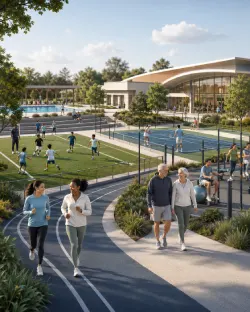
Regular movement supports cardiovascular fitness, muscular strength, balance, coordination, flexibility and general physical confidence. Different activities place different demands on the body. Running develops endurance and lower-body conditioning, swimming combines cardiovascular work with resistance, and racquet sports require quick reactions and changes of direction. Activities such as gymnastics, skating and martial arts place greater emphasis on balance and body control.
People do not need to consider themselves athletes to benefit. Walking groups, casual leagues, recreational swimming and modified sports can all make movement a more regular part of daily life. The most useful form of activity is often one that people enjoy enough to continue rather than one chosen solely because it appears demanding.
Sport Creates Opportunities for Social Connection
Many people initially join a sport because they want to become fitter or learn a particular skill, but relationships often become one of the strongest reasons they continue. Regular practices, competitions and club events provide repeated opportunities to interact with teammates, coaches, opponents, volunteers and families.
That social element can be particularly valuable for someone entering a new school, neighbourhood or community. Sport creates a shared purpose around which relationships can develop naturally. Individual activities can provide the same sense of connection. Swimmers, runners, tennis players and athletes may compete individually while training within groups and developing strong relationships with others who share their interests.
Participation Can Change Throughout Life
A person’s involvement in sport rarely follows one uninterrupted path. Children may experiment with several activities, teenagers may become more competitive, and adults may participate less because of education, careers or family responsibilities. Someone who leaves organized sport for years may later return through a recreational league, running club or community fitness program.
Healthy sporting environments make room for these changes. Competitive pathways are important for participants who want them, but casual and recreational options matter just as much. Giving people different ways to participate makes it easier for sport to remain part of life even when priorities, abilities and available time change.
What Children Can Learn Through Organized Sport
Youth sport is frequently discussed in terms of exercise, yet its influence can extend well beyond physical fitness. Practices, games and training environments give children repeated opportunities to solve problems, communicate with others and respond when situations do not go as expected.
The quality of the experience matters. Children are more likely to develop a positive relationship with physical activity when adults value learning, effort, appropriate competition and enjoyment rather than treating results as the only measure of success.
Developing Movement Skills and Physical Confidence
Childhood provides an important opportunity to experience a broad range of movements. Running, jumping, catching, throwing, balancing, kicking, swimming and changing direction contribute to a foundation that can support many different forms of activity. Each sport develops these abilities in a slightly different combination.
A child who becomes comfortable moving may also feel more confident trying unfamiliar activities later. This can matter long after organized competition ends because active recreation feels more approachable when basic movement skills are familiar. Allowing younger participants to explore several sports can expose them to different movements, coaching methods and social environments before they decide whether they want to focus more seriously on a particular activity.
Learning Teamwork, Responsibility and Communication
Team sport regularly places children in situations where their choices affect other people. They discover that arriving prepared, listening to instructions, communicating clearly and supporting teammates all contribute to a shared outcome. These lessons develop naturally through ordinary practices, games and tournaments rather than through a single conversation about teamwork.
Individual sports can teach similar forms of responsibility. A swimmer may race alone, but improvement still involves cooperating with coaches and training partners. A runner or gymnast may perform individually while remaining part of a wider club. What matters is learning that personal effort exists within an environment where other people’s time, safety and contributions deserve respect.
Understanding Wins, Losses and Gradual Improvement
Sport gives children regular opportunities to experience both success and disappointment in relatively controlled settings. Missing a shot, losing a close match or performing below expectations can be frustrating, but these moments can also teach participants how to respond constructively and continue working.
Adults strongly influence what children learn from these experiences. When coaches and parents treat mistakes as part of improvement rather than proof of failure, children can begin separating a temporary result from their personal worth. Progress becomes easier to recognize when success includes better technique, stronger decision-making and consistent effort alongside scores and trophies. This broader definition can also help keep participation enjoyable as competition becomes more demanding.
Finding the Right Sport and the Right Environment
There is no single activity that suits every participant. Interests, personality, physical ability, available facilities, cost and scheduling all influence whether a sport becomes enjoyable and practical enough to continue.
Choosing well is therefore less about identifying the theoretically best sport and more about finding an environment that fits the individual. A good match can make regular participation considerably easier to maintain.
Matching Sport to Interests and Temperament
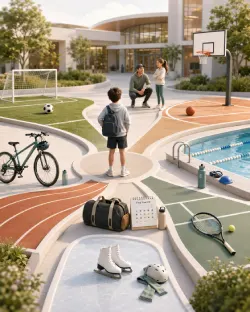
Some people enjoy the constant communication and shared responsibility found in football, basketball or hockey. Others prefer activities such as swimming, athletics or cycling, where progress can be measured more independently. Neither approach is inherently better, and many participants enjoy elements of both.
Personality can provide clues, but it should not become a restriction. A quiet child may thrive in a team environment, while someone highly social may prefer an individual sport. Trying an activity is usually more useful than predicting preferences in advance. Introductory sessions, school programs and recreational clubs offer relatively low-pressure opportunities to experience different sports before committing significant time or money.
Considering Cost, Travel and Time Commitment
A sport needs to work away from the playing area as well as during practice. Registration fees may represent only part of the real cost. Equipment, clothing, transportation, competition fees and additional coaching can significantly increase what a household spends during a season.
Time deserves the same consideration. A local recreational program meeting once or twice each week requires a very different commitment from a competitive team that trains frequently and travels on weekends. Understanding expectations before registration helps families choose programs that leave realistic space for school, employment, rest and other responsibilities. Participation is generally more sustainable when it fits normal life rather than requiring everything else to be organized around it.
Why Trying Different Activities Can Be Valuable
Focusing on one sport from an early age is sometimes presented as the obvious route toward improvement, but specialization is not the only way to develop ability. Experiencing different sports introduces children to a wider range of movement patterns, coaching styles, tactical problems and social groups.
Sampling also gives young participants time to discover what they genuinely enjoy. Someone who tries football, skating, swimming and tennis may eventually choose one competitively or continue several recreationally. Both outcomes can be positive. The wider objective is to build familiarity with movement and participation so that physical activity remains an available choice even when interests change later.
What Supports Healthy Athlete Development
Athlete development means different things for different people. One participant may be developing enough confidence to join a recreational league, while another may be progressing through regional, provincial or high-performance competition.
Whatever the level, development works best when technical learning, physical preparation, motivation and recovery are considered together. Performance matters, but it should not become the only indication that someone is progressing.
- Age and stage matter. Training should reflect physical maturity, experience and the actual demands of the sport rather than copying programs designed for older or more experienced athletes.
- Skill development takes time. Regular, purposeful practice normally matters more than expecting dramatic improvement after a small number of sessions.
- Training load should remain manageable. Additional practice is not automatically beneficial when fatigue begins affecting health, sleep, motivation or performance.
- Enjoyment still matters. Participants are more likely to remain involved when improvement and competition exist alongside supportive relationships and a reasonable sense of choice.
- Recovery belongs in the program. Rest, sleep, hydration and appropriate nutrition help the body respond to physical demands and prepare for future sessions.
- Different pathways should remain available. Not every young athlete needs to pursue high-performance competition. Recreational options remain valuable as interests, circumstances and goals change.
Development is not only about identifying the most talented participants. It also involves creating systems where people can continue improving without being pushed toward demands that are unsuitable for their age, health or motivation.
In Canada, pathways can include community clubs, school teams, regional competitions, provincial organizations and higher-performance programs. Structures differ between sports, but the underlying challenge remains similar: helping participants progress while protecting their health, confidence and willingness to remain active.
Coaches Help Shape the Sporting Experience
Coaches influence much more than technique and results. For children and teenagers in particular, a coach can determine whether practices feel supportive, challenging, intimidating, enjoyable or unnecessarily stressful.
Effective coaching therefore requires more than knowledge of a sport. Communication, planning, patience and the ability to understand different participants all influence whether instruction leads to genuine development.
Teaching Skills in a Way Participants Can Understand
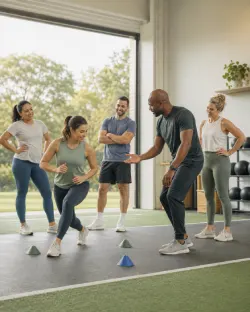
Knowing how to perform a movement and knowing how to teach it are different skills. Coaches need to break complicated techniques into manageable steps, explain what participants should focus on and provide feedback that can be applied during the next attempt.
Clear instruction can also contribute to safer participation. Athletes who understand positioning, movement technique and the purpose of a drill are less likely to improvise in ways that introduce unnecessary risk. Effective coaches adjust explanations according to age and experience rather than assuming everyone learns in the same way. Demonstrations, short instructions and opportunities to practise can often communicate more effectively than lengthy technical explanations.
Creating an Environment Where Mistakes Are Useful
Learning any sport involves errors. Players lose possession, miss targets, make poor decisions and mistime movements. A productive coaching environment treats these mistakes as information that can guide the next attempt rather than as reasons to embarrass participants.
This does not require removing standards or avoiding competition. Athletes can still be expected to prepare properly, behave respectfully and make an appropriate effort. The difference is in the feedback they receive. Specific guidance gives a participant something concrete to change, while insults or vague criticism provide little useful information. Athletes who are able to attempt difficult skills without fearing humiliation also gain more opportunities to learn and become confident.
Staying Active and Recovering Through Adulthood
Adult participation often becomes less structured than youth sport. Employment, family responsibilities, changing physical capacity and limited time can make the routines that once supported regular activity more difficult to maintain.
Someone returning after several inactive years may remember previous abilities more clearly than what their body is currently prepared to do. That gap can make early sessions frustrating and sometimes encourages people to increase intensity too quickly.
Gradual progression gives muscles, joints and cardiovascular fitness time to adapt. Recreational programs can help because they provide routine and structure without necessarily demanding high-level performance. Walking, swimming, cycling and modified versions of familiar sports can also provide useful starting points. Consistency is generally more helpful than attempting to recreate previous performance immediately. A manageable routine that lasts for months is more valuable than an exhausting schedule abandoned after several weeks.
How Local Sport Strengthens Communities
Community sport depends on far more people than the participants wearing uniforms. Coaches, officials, parents, volunteers, organizers and facility staff all contribute to programs that allow local activity to continue.
Local clubs provide structure around participation. Someone may initially join simply because they want to play, but over time the organization can become an important part of their social life. Parents meet other families, volunteers build friendships and younger participants grow up seeing familiar coaches, officials and community members.
This continuity can create a sense of belonging that extends beyond results. Strong community clubs often provide space for recreational participants alongside those pursuing higher levels of competition. When different pathways remain connected, people can stay involved even as their abilities and priorities change. A former player might coach, officiate or volunteer rather than leaving the sporting community entirely.
Keeping Sport Part of Everyday Life
Sport may begin with a child’s first practice, a neighbourhood league or an adult deciding to become active again. What matters over time is not whether every participant reaches a high competitive level, but whether realistic opportunities remain available as interests, abilities and circumstances change.
Healthy sporting communities make room for beginners, recreational participants, developing athletes, coaches, volunteers and people returning after long breaks. Performance can be valued without becoming the only reason participation matters.
With the kind support: